
PTC Physiotherapy
Lumbar Disc Bulge Physiotherapy in Lidcombe
Being told you have a disc bulge can leave you with more questions than answers. Is it causing your pain? Should you stop exercising? Will your back ever get better?
By the end of this guide, you’ll have a clearer understanding of:
- What a disc bulge is.
- What symptoms can occur.
- When to get urgent help.
- What to do initially.
- When to see a GP.
- When to see a physiotherapist.
- How physiotherapy can help.
- Answers to common questions about recovery, scans and exercise.
1. What is a Lumbar Disc Bulge?
A lumbar disc bulge is a change in the shape of one of the discs between the bones in your lower back. The disc extends beyond its usual boundary across a broad area.
A bulge can be associated with back or leg symptoms, but it can also appear on a scan in someone without pain. This means a scan finding needs to be considered alongside your symptoms and physical assessment. Research on disc findings in people without pain.
That doesn’t make your pain any less real. It means the wording on a report is only part of the picture. How you feel, what has become difficult and how your symptoms change also matter.
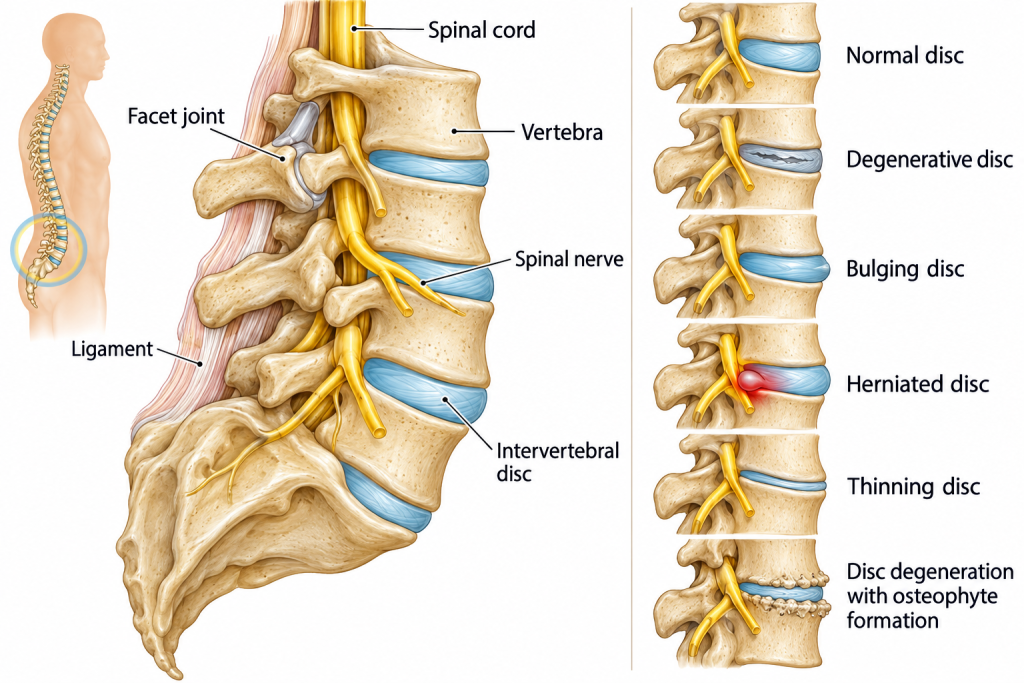
A disc bulge describes a change in shape. It does not always cause pain
2. What symptoms can occur?
Symptoms associated with a lumbar disc problem may include:
- Lower back pain.
- Difficult bending or straightening.
- Pain travelling into the buttock or leg.
- Tingling or numbness in the leg or foot.
- Muscle weakness when a nerve is affected.
These symptoms can have other causes. Pain when sitting or bending doesn’t, by itself, confirm that a disc is responsible. NHS information on disc symptoms.
Some people mainly notice back pain. Others find that leg symptoms have a bigger effect on walking, sleeping or getting through the day. An assessment looks at the whole pattern.
3. When should you get urgent help?
Seek immediate emergency assessment if you develop:
- New difficulty passing urine.
- Loss of bladder or bowel control.
- Numbness around your genitals or bottom.
- Severe or rapidly worsening leg weakness.
Go to an emergency department. Call 000 if you need an ambulance. Don’t wait for a physiotherapy appointment. Australian guidance on urgent assessment.
Back pain after a serious accident, or with fever and feeling unwell, also needs urgent medical assessment. Healthdirect guidance on back pain.
4. What should you do initially?
If you don’t have the warning signs above, a useful starting point is to keep moving at a manageable level and temporarily adjust activities that aggravate your symptoms.
Keep some movement in your day
Short walks and regular changes of position may be easier to manage than long periods of activity. Prolonged bed rest generally doesn’t help. NHS advice on staying active.
Adjust the amount you’re doing
If sitting is uncomfortable, try shorter periods with movement breaks. If lifting brings on symptoms, temporarily reduce the weight or number of repetitions.
You don’t need to return to your usual workload all at once.
Pay attention to your response
Notice which activities settle your symptoms, which make them worse and how you feel afterwards. That information can help guide adjustments and is useful if you seek an assessment.
Ask about pain relief if you need it
A pharmacist or GP can explain which options may be suitable for you, taking your health conditions and other medicines into account. NHS advice on managing disc symptoms.
Try these gentle back pain exercises on your bed or on a exercise mat
5. When should you see a GP?
See a GP if pain is affecting your sleep or daily activities, isn’t improving over the following weeks, or you need help managing it.
Seek prompt medical review for unexplained weight loss, persistent pain that is worse at night, or new or worsening nerve symptoms. Severe or rapidly worsening weakness needs emergency assessment, as outlined above. Healthdirect back pain guidance and NHS guidance on when to seek medical review.
A GP can review your overall health, discuss medicines and decide whether investigations or specialist care are needed.
You don’t have to choose between a GP and a physiotherapist. Depending on your symptoms, both may have a role in your care.
6. When should you see a physiotherapist?
A physiotherapy assessment may be useful if back or leg symptoms are limiting your movement, work or exercise, or you’re unsure how to return to your usual activities.
For example, you might want help because:
- You’re avoiding bending or lifting because you’re worried about your back.
- You can manage daily tasks but haven’t returned to training.
- Symptoms keep flaring up when you increase activity.
- You’re unsure which exercises are suitable.
An assessment can help identify what you can currently tolerate and give you a starting point for rehabilitation. A physiotherapist can also recognise findings that need medical review.
The urgent symptoms described earlier should be assessed medically without waiting for a routine physio appointment.
7. How can physiotherapy help with disc bulge symptoms?
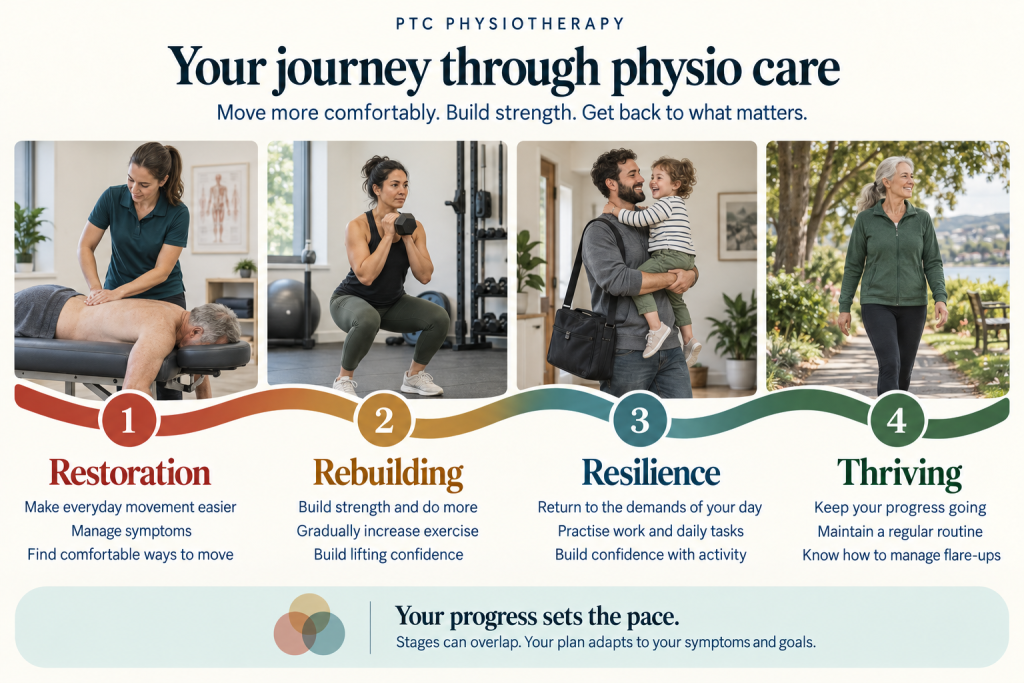
At PTC Physiotherapy in Lidcombe, we organise rehabilitation into four stages. They can overlap, and progress determines the pace.
8. Common Questions about Lumbar Disc Bulges
How long does recovery take?
Recovery varies from person to person, but research published in the BMJ provides a useful guide for disc related leg pain when there are no severe or worsening neurological symptoms
- 2 to 6 weeks: Many people notice meaningful improvement.
- 6 to 12 weeks: Most of the recovery typically happens.
- 3 to 6 months: Further improvement may continue at a slower pace.
Improvement might mean getting dressed more easily, walking further or returning to activities you’ve been avoiding.
Is a disc bulge the same as sciatica?
No. A disc bulge describes a change in a disc’s shape. Sciatica describes symptoms associated with irritation or compression of the sciatic nerve or its nerve roots, often including pain down the leg.
A disc problem can contribute to sciatica, but not every bulge causes it. NHS information on sciatica.
Do you need an MRI before physiotherapy?
Usually, no. An assessment can take place without an MRI. Imaging may be appropriate if there are concerning findings or the result would change your care. Australian guidance on imaging for low back pain.
Can you return to lifting and the gym?
Returning to lifting and training can be part of rehabilitation. The starting point depends on your symptoms, current strength and response to exercise.
A programme can adjust the exercises, weights and training volume, then gradually build towards what you want to do.
Will you need surgery?
• Surgery is usually not the first option for low back pain linked to a lumbar disc problem. Initial treatment depends on your symptoms and whether there are signs of nerve damage. Australian clinical guidance safetyandquality.gov.au
• A disc bulge on MRI does not always cause pain. Bulges and degeneration are common in people without symptoms and become more common with age. Scans should be interpreted alongside your symptoms, examination and function. Systematic review of MRI findings pubmed.ncbi.nlm.nih.gov
• Some herniated discs can reduce in size without surgery. This is more likely with an extrusion or sequestration than with a simple bulge. Changes on a scan do not always match changes in pain or function. Review of disc regression by type · Review of scan changes and symptoms pubmed.ncbi.nlm.nih.gov
• Initial care usually focuses on movement and function. This may include staying appropriately active, managing symptoms, and an individualised physiotherapy and exercise programme. Clinical guidance NICE
• Surgery may be appropriate for progressive weakness, cauda equina syndrome, or persistent disabling nerve related leg pain when appropriate care has not improved pain or function and imaging matches the symptoms.
CONSIDER GETTINg HELP
Looking for help with back or leg pain in Lidcombe?
If you’d like help understanding your symptoms and deciding what to do next, you can book an assessment at PTC Physiotherapy.
We’ll discuss what’s been happening, assess your movement and explain your options. If you already have a scan report, bring it along so we can consider it alongside your symptoms.
We’re inside Lidcombe Shopping Centre, convenient for people in Lidcombe, Auburn, Berala, Strathfield and Silverwater.
Visit: Shop CMO02, 92 Parramatta Rd, Lidcombe NSW 2141.
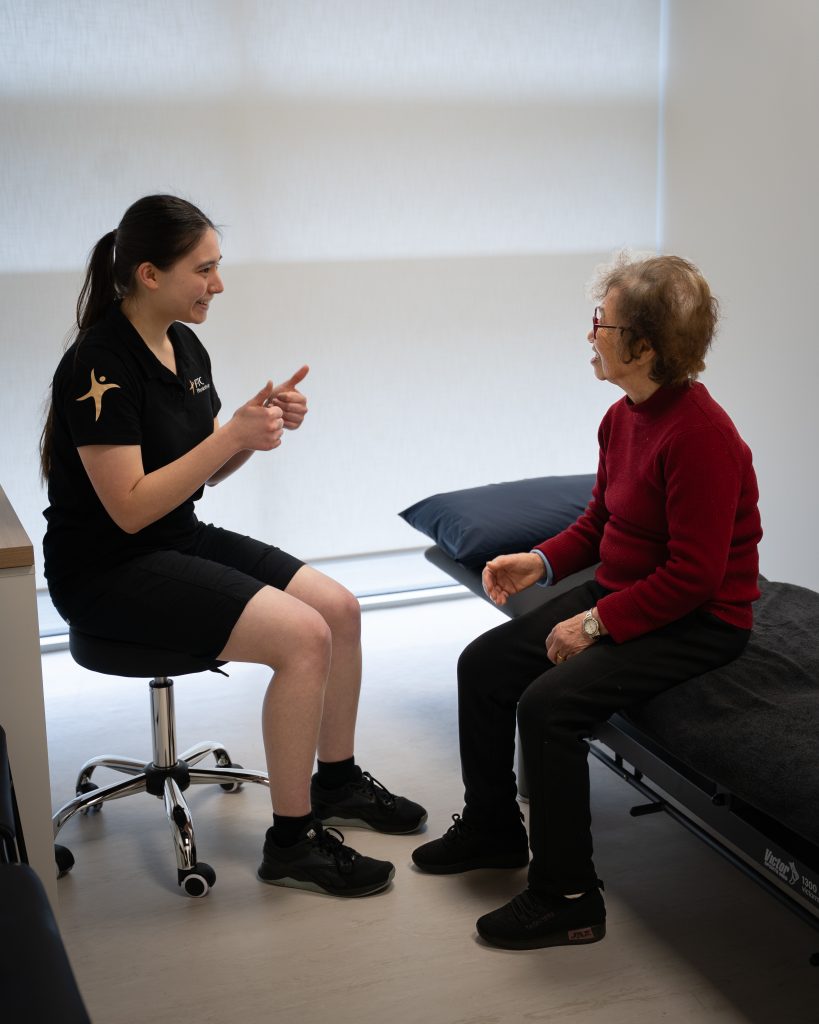
An assessment starts with understanding your symptoms and what matters to you.
