
PTC Physiotherapy
Knee Osteoarthritis
Physiotherapy in Lidcombe
Are stairs becoming harder, or does your knee feel stiff when you get up from the couch? Being told you have knee arthritis can raise questions. Is exercise still safe? Will you need a knee replacement?
By the end of this guide, you’ll have a clearer understanding of:
- What knee osteoarthritis means and which symptoms can occur.
- What to do during a flare and when to seek medical help.
- How physiotherapy can help with everyday movement.
- Common questions about scans, exercise, surgery and improvement.
1. What is Knee Osteoarthritis?
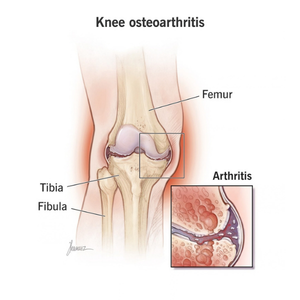
Knee osteoarthritis, or knee OA, is a long-term condition involving the whole joint, including the cartilage, bone and surrounding tissues. Cartilage is the smooth covering on the ends of your bones. Changes in the joint can contribute to pain, stiffness and difficulty moving. Healthdirect explains osteoarthritis.
It is more common as we get older, and previous knee injuries can increase the risk. Symptoms can be managed, and a diagnosis does not mean you must stop being active.
2. What symptoms can occur?
You may notice:
- Pain with daily tasks. Stairs, longer walks or getting out of a low chair become uncomfortable.
- Stiffness after resting. The first few steps after sitting can feel difficult.
- Swelling or reduced movement. Bending or straightening your knee may be harder.
- Clicking or grating. These can occur alongside other symptoms, but do not establish a diagnosis on their own.
A busy day can trigger symptoms without causing the condition. Other knee problems can feel similar.
When to get urgent help
Go to an emergency department now if your knee is red and hot with a fever, badly swollen or visibly deformed, or painful after a major injury. Call 000 if an ambulance is needed; these symptoms should not be treated as a routine arthritis flare. Healthdirect’s urgent knee advice.
3. What should you do initially?
Keep some manageable movement in your day. Start with changes you can maintain:
- Break longer errands into shorter trips with rests.
- Choose activity you tolerate, such as a short walk, cycling or water exercise.
- Adjust the depth, weight or number of repetitions in exercises that aggravate your knee.
- Note how your knee feels afterwards and whether swelling or daily function changes.
Some discomfort with exercise does not automatically mean harm. If activity leaves you substantially worse, reduce the amount and have the plan reviewed. The Australian Knee Osteoarthritis Clinical Care Standard recommends exercise matched to your needs.
What should you avoid during a flare?
- Stopping all movement for days because you are afraid of damaging the joint.
- Doing a large amount on a good day, then struggling through the next few days.
- Assuming a painful knee must be ready for surgery.
If weight management is relevant to you, ask your GP or dietitian about support alongside exercise. You can begin working on strength and movement without waiting for weight loss.
4. When should you see a GP?
See your GP if:
- • Pain is interrupting sleep or making everyday tasks increasingly difficult.
- • Your knee keeps giving way, or the diagnosis is uncertain.
- • You want to discuss pain relief, other health conditions or further treatment options.
Seek prompt medical assessment if you cannot bear weight or your knee becomes locked. Your GP can consider other causes and whether tests would change your care; imaging is not routinely needed for typical knee OA.
5. When should you see a physiotherapist?
Consider booking an assessment if you’re:
- Using your arms more to get out of chairs or avoiding stairs.
- Cutting back on outings because your knee becomes sore.
- Unsure how much exercise is useful or how to progress it.
At PTC Physiotherapy Lidcombe, we build a plan around your priorities. Private appointments need no GP referral; check funding requirements separately.
6. How can physiotherapy help with Knee Osteoarthritis?
We help you develop a routine that fits your knee and your day:
- • We assess the difficult tasks. We look at knee movement, strength, balance and the activities you are avoiding.
- • We make exercise practical. Your plan may include chair rises, step exercises and manageable fitness work, adapted to your starting point.
- • We check whether it is helping. We track tasks such as using the stairs or completing an outing, then adjust your exercises.
Exercise and education remain central. Hands-on care, if useful for comfort, supports the active plan; it does not rebuild cartilage. Arthritis Australia outlines the treatment options.
What happens at your first assessment?
Your first appointment is 45 minutes, with four practical steps:
1. We listen first. We ask about pain, sleep, previous injuries and what your knee is stopping you doing.
2. We assess and measure. We check movement and swelling, and may measure chair-rise ability, step control and leg strength to establish your starting point.
3. We start treatment. Where appropriate, we practise suitable exercises and ways to manage difficult tasks. Findings needing urgent medical care take priority.
4. You leave with a plan. You know what to practise, what response to monitor and when we will review progress.
Our four stages describe how we organise your care. They can overlap, and the pace follows your symptoms and goals.
Restoration
We make movement more manageable, perhaps by changing chair height, shortening outings or using a rail on stairs while symptoms settle.
Rebuilding
We develop thigh and hip strength and general fitness. Exercises progress through resistance, meaning how much weight you use, or the amount you can comfortably do.
Resilience
We practise the demands of your day, such as carrying shopping, repeated stairs or getting down to the garden. Progress means managing more with an acceptable response afterwards.
Thriving
We help you maintain a realistic routine and recognise when to adjust it. You leave with a flare plan and reasons to seek reassessment.
Your local clinic
PTC Physiotherapy Lidcombe offers guided exercise and a home plan. We are inside Lidcombe Shopping Centre, Shop CMO02, 92 Parramatta Rd, Lidcombe NSW 2141, supporting Lidcombe, Auburn, Berala, Strathfield, Silverwater and the broader Cumberland Council area.
7. Frequently asked questions
Do I need an X-ray or MRI?
Usually, assessment is enough to begin managing typical knee OA. X-rays may help if symptoms are unusual or surgery is being considered; an MRI is not routinely needed, and scan changes do not reliably explain pain severity. Australian guidance on imaging.
Can I exercise if my knee is sore?
Often, yes, with the activity and amount adjusted to your response. Start with something manageable and ask for guidance if pain or swelling keeps increasing.
Will I need a knee replacement?
A knee replacement is not inevitable. It may be considered when substantial pain and limitations remain despite appropriate non-surgical care, after discussing the benefits and risks with your GP and surgeon. Arthritis Australia’s treatment guidance.
How long does improvement take?
Knee OA is a long-term condition, so improvement means better comfort and function rather than a date when the arthritis disappears. We review the trend in your chair rises, stairs, walking and flare frequency at follow-ups, adjusting the plan if progress stalls or symptoms worsen. Living with osteoarthritis.
CONSIDER GETTINg HELP
Looking for help with knee pain in Lidcombe?
Book an assessment at PTC Physiotherapy Lidcombe to understand what is making movement difficult and find a starting point for exercise. Bring any existing reports and tell us which daily task you most want to improve.
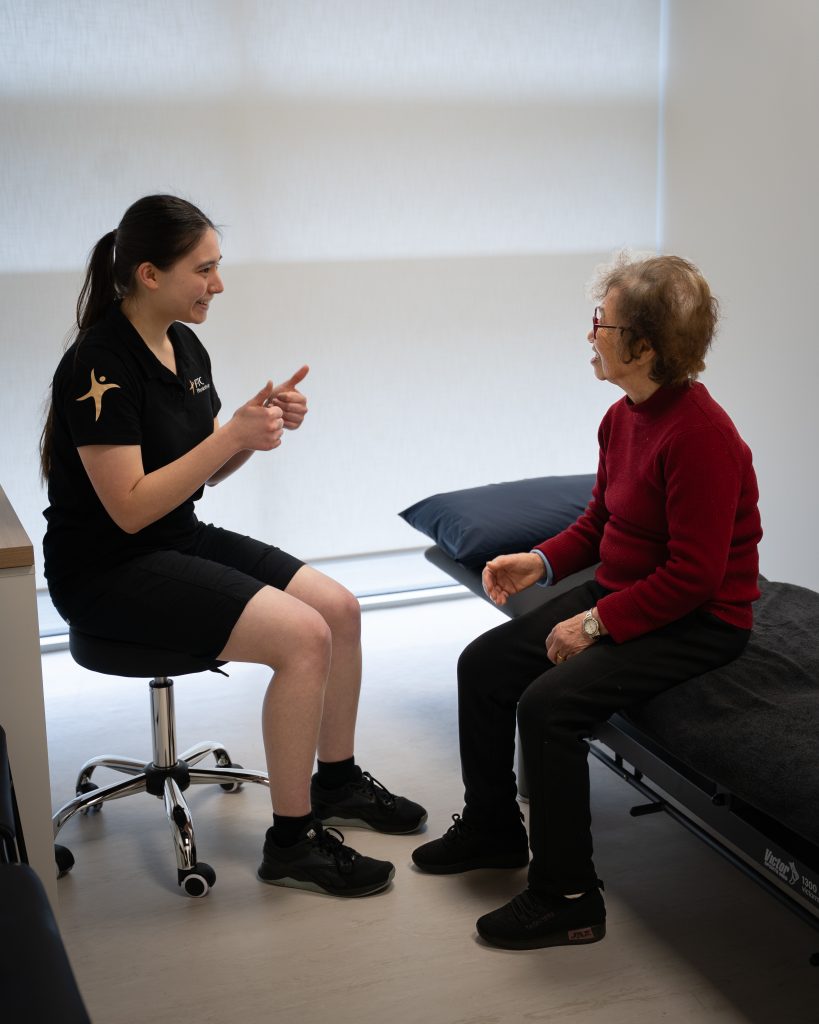
An assessment starts with understanding your symptoms and what matters to you.
