
PTC Physiotherapy
Anterior Cruciate Ligament (ACL) Injury Physiotherapy in Lidcombe
Did your knee give way during a turn or landing, leaving it swollen and difficult to trust? Will you need surgery? Can rehabilitation start now? When can you return to training?
By the end of this guide, you’ll have a clearer understanding of:
- What an ACL injury means and which symptoms can occur.
- What to do initially and when to get urgent help.
- How physiotherapy fits with surgical and non-surgical care.
- Common questions about scans, treatment choices and returning to sport.
1. What is an ACL injury?
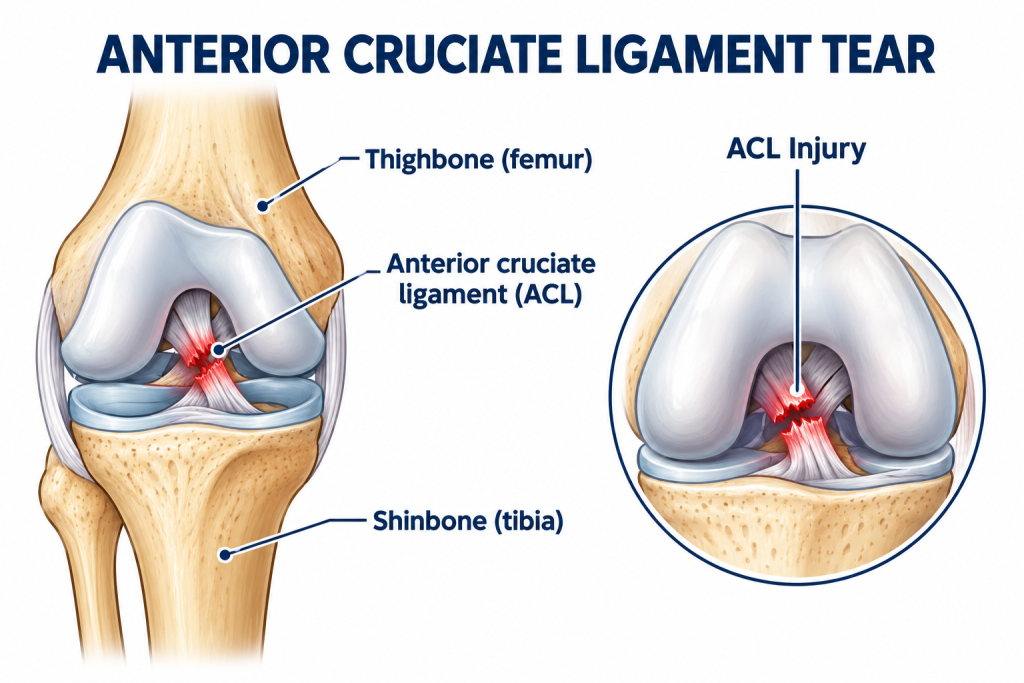
The anterior cruciate ligament, or ACL, connects your thighbone and shinbone inside the knee. It helps control movement between them, especially during turning and pivoting.
A sudden turn, awkward landing or contact injury can partially or completely tear it. A meniscus, the knee’s cushioning cartilage, or other ligaments may also be injured. Sports Medicine Australia explains ACL injuries.
2. What symptoms can occur?
You may notice:
- A pop or giving-way sensation. This may happen at the time of injury, but is not present in every case.
- Swelling soon afterwards. The knee can become painful and difficult to bend or straighten.
- Instability. It may buckle when you turn or step awkwardly.
- Difficulty continuing activity. Walking, stairs or returning to the game may feel unsafe.
These signs suggest but do not prove an ACL tear. Examination, sometimes repeated after swelling settles, helps clarify the injury. Guidance on ACL assessment.
When to get urgent help
Go to an emergency department now for a visibly deformed or badly swollen knee, a major injury, or a red, hot knee with fever. A sudden inability to actively straighten the knee after injury also needs emergency assessment for a possible tendon rupture. Call 000 if an ambulance is needed. Healthdirect’s urgent knee advice and NSW Health’s acute knee guidance.
Seek prompt medical assessment if you cannot bear weight or the knee is locked. Do not force the movement or return to play.
3. What should you do initially?
Stop the activity and arrange an assessment as soon as possible:
- Protect the knee from further twisting or episodes of giving way.
- Use walking aids if advised when pain or instability makes walking difficult.
- Elevate the leg and consider a wrapped cold pack for comfort; keep ice off bare skin.
- Once assessed, follow the advice for movement, weight-bearing and any brace.
Associated injuries can change the early plan. Sports Medicine Australia recommends early professional assessment.
What should you avoid after the injury?
- Testing the knee with repeated pivots, jumps or a return to the match.
- Assuming less pain means the knee is ready for sport.
- Following someone else’s brace settings or postoperative exercise programme.
After surgery, follow your team’s instructions, including restrictions for any other structures treated.
4. When should you see a GP?
See your GP promptly after a suspected ACL injury, particularly if:
- Swelling or instability persists after a twist or landing.
- You need advice about pain relief, work duties or imaging.
- Your knee keeps giving way during ordinary activities.
Your GP can arrange investigations or specialist referral. Treatment decisions consider associated injuries, stability and your goals. Healthdirect outlines ACL treatment options.
5. When should you see a physiotherapist?
Consider booking an assessment if you’re:
- Unsure how to restore movement and strength after injury.
- Preparing for surgery or returning after an operation.
- Walking comfortably but not ready for physical work or sport.
At PTC Physiotherapy Lidcombe, we work with your medical team and surgical restrictions. Private appointments need no GP referral; check funding requirements separately.
6. How can physiotherapy help with an ACL injury?
We build the movement, strength and confidence your activities require:
- • We establish a starting point. Swelling, knee movement, walking and muscle control guide the early plan.
- • We progress the demands. Strengthening and balance lead towards running, landing and direction changes when appropriate.
- • We assess readiness. We consider knee response, strength, movement quality and confidence before building towards full participation.
Rehabilitation matters with or without surgery. Pain relief or one test result cannot establish sport readiness. ACL rehabilitation guidance.
What happens at your first assessment?
Your first appointment is 45 minutes. Bring any scan reports, specialist letters and postoperative instructions.
1. We listen first. We ask how the injury happened, whether the knee gives way, and what work or sport you want to return to.
2. We assess and measure. We examine swelling, movement, walking and appropriate strength or stability tests. Jump testing is introduced later, when suitable.
3. We start treatment. We may practise comfortable movement, muscle activation or walking with aids. Findings requiring urgent medical care take priority.
4. You leave with a plan. We explain what to practise, what to avoid, any referral needed and the milestones for your next review.
Our four care stages overlap; progress and surgical restrictions determine the pace.
Restoration
We focus on swelling, comfortable walking, knee straightening and thigh-muscle control. Getting around home confidently may be the first useful goal.
Rebuilding
We develop leg strength and control through progressively harder exercises. We compare performance over time and consider both legs and the demands ahead.
Resilience
We build towards physical work or sport-specific tasks, including deceleration, landing and direction changes where relevant. Confidence and the knee’s response to repeated effort matter alongside test results.
Thriving
We plan ongoing strength work and a gradual transition from training to competition where appropriate. You know how to respond to renewed swelling, giving way or a drop in confidence.
Your local clinic
PTC Physiotherapy Lidcombe provides guided rehabilitation and home exercise plans. We are inside Lidcombe Shopping Centre, Shop CMO02, 92 Parramatta Rd, Lidcombe NSW 2141, supporting Lidcombe, Auburn, Berala, Strathfield, Silverwater and the broader Cumberland Council area.
7. Common questions about ACL injuries
Do I need an MRI?
An MRI is often used to clarify an ACL injury and assess other structures in the knee. You can still seek assessment before a scan is arranged; your clinician will decide which investigations are needed. Sports Medicine Australia’s assessment guidance.
Does every ACL tear need surgery?
No; some people manage well with structured rehabilitation, while others need a discussion about reconstruction because of ongoing instability, associated injuries or their activity goals. Decide with an experienced clinician and your treating team rather than from the scan wording alone. Healthdirect discusses non-surgical and surgical options.
Can I return to my previous sport?
It may be possible, but return is not guaranteed and should be planned in stages. Strength, movement, confidence and tolerance of training all matter; Australian research highlights fear of reinjury as a common barrier to returning. La Trobe University’s return-to-sport research.
How long does rehabilitation take?
Rehabilitation takes months, and improving daily movement is an earlier goal than unrestricted pivoting sport. After reconstruction, clinical recommendations advise at least nine months before return to pivoting sport, together with meeting readiness criteria; this is measured from surgery and is not automatic clearance. Without surgery, timing also depends on stability, associated injuries and functional progress. ACL recovery and return-to-sport guidance.
CONSIDER GETTINg HELP
Looking for help with ACL rehabilitation in Lidcombe?
Book an assessment at PTC Physiotherapy Lidcombe to plan your next step, whether you are weighing treatment options or rebuilding after surgery. We will explain what your findings mean for rehabilitation.
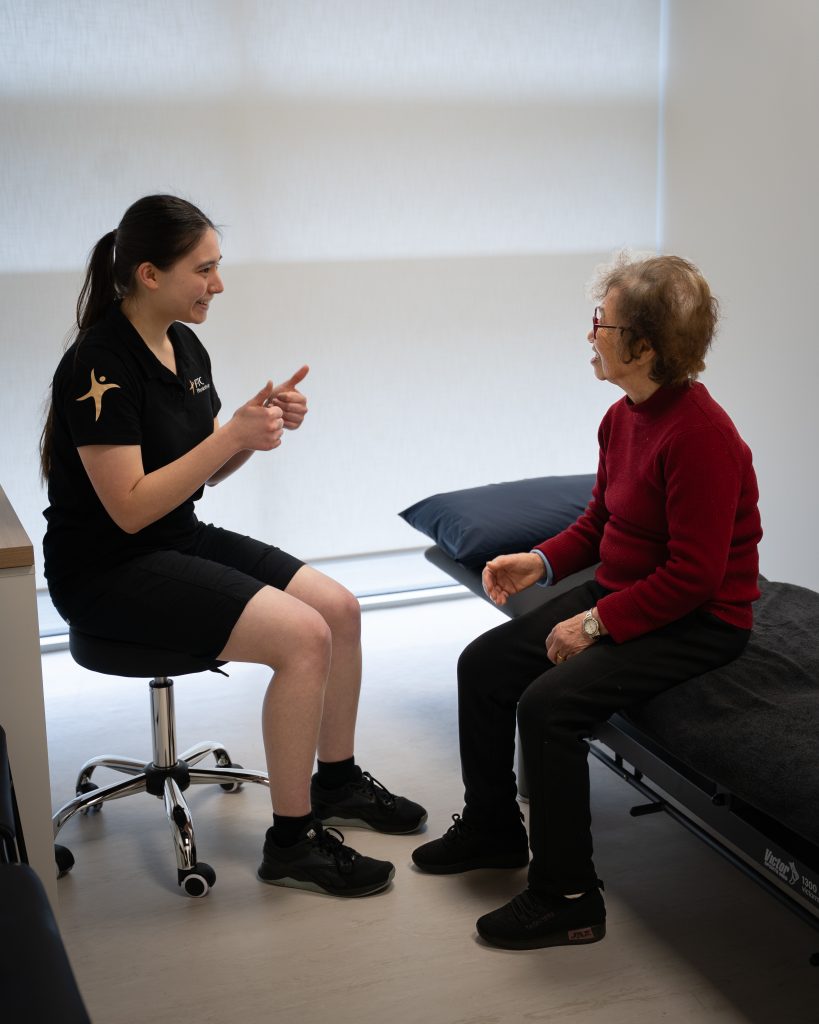
An assessment starts with understanding your symptoms and what matters to you.
