
PTC Physiotherapy
Medial Collateral Ligament (MCL) Injury Physiotherapy in Lidcombe
Has a tackle, awkward step or twist left the inside of your knee sore? You might be limping around the house or unsure whether your knee will hold when you turn. Is it an MCL injury? Do you need a brace, and when can you get back to your usual activity?
By the end of this guide, you’ll have a clearer understanding of:
- What the MCL does and which symptoms need attention.
- How to manage a new injury and when to seek medical help.
- What assessment and rehabilitation can involve.
- Common questions about walking, braces, surgery and recovery.
1. What is an MCL injury?
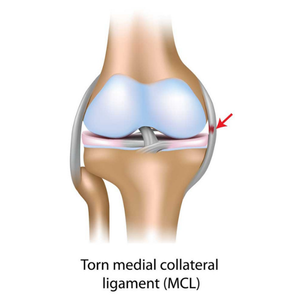
The medial collateral ligament, or MCL, is a strong band of tissue along the inside of your knee. It connects your thigh bone to your shin bone and helps resist forces that push the knee inwards.
An MCL sprain means the ligament has been injured; this can range from a mild injury to a partial or complete tear. A blow to the outside of the knee is one possible mechanism. The examination also checks whether other structures were injured. RACGP explains collateral ligament injuries.
2. What symptoms can occur?
You may notice:
- Inner knee pain. The area is tender, especially when you step or turn.
- Swelling or bruising. This may develop along the inside of the knee.
- Difficulty moving. Bending, straightening or getting into a car feels uncomfortable.
- Unsteadiness. Your knee feels unreliable during a change of direction.
Pain on the inside of the knee can also come from the meniscus or other tissues. Pain location alone cannot confirm an MCL tear or its severity.
When to get urgent help
Go to an emergency department now after a major injury, if your knee is deformed or badly swollen, or if it is red and hot with a fever. Call 000 if an ambulance is needed. Healthdirect’s urgent knee advice.
Arrange prompt medical assessment if you cannot bear weight, your knee keeps collapsing or you cannot straighten it. Do not keep testing it with twists or squats.
3. What should you do initially?
Protect the knee from further sideways stress while you arrange an assessment:
- Stop the activity that caused the injury and reduce unnecessary walking if you are limping.
- Use any prescribed crutches or brace as instructed.
- Keep movements gentle and within the limits given by your treating clinician.
- Record swelling, walking difficulty and any episodes of giving way.
The amount of weight you can put through your leg depends on the injury. Ask for guidance if walking feels unstable. Healthdirect’s knee injury guide explains why some injuries need additional support.
What should you avoid after an injury?
- Returning to a game because the initial pain has settled.
- Stretching forcefully into inner knee pain or repeatedly pushing the knee sideways.
- Choosing a brace or removing prescribed support without checking the plan.
Ask your GP or pharmacist about pain relief that suits your medical history and other medicines.
4. When should you see a GP?
See your GP early if:
- • You have a significant new injury or are struggling to walk normally.
- • Swelling or pain is increasing, or the knee repeatedly gives way.
- • You need advice about pain relief, scans or a specialist opinion.
Your GP can assess for associated injuries and decide whether imaging would change treatment. Persistent instability or an injury involving several ligaments needs further review; it should not be managed by exercise alone without assessment.
5. When should you see a physiotherapist?
Consider booking an assessment if you’re:
- Unsure how to move with a diagnosed MCL injury.
- Having difficulty with stairs, work duties or getting in and out of the car.
- Ready to rebuild activity but uncertain about turning, running or sport.
At PTC Physiotherapy Lidcombe, we assess how your knee is functioning and help coordinate medical review when needed. Private physiotherapy appointments need no GP referral; funding arrangements may have separate requirements.
6. How can physiotherapy help with an MCL injury?
We match rehabilitation to your knee’s stability and the activities you need to manage:
- • We make everyday movement manageable. We review walking, stairs and any support already prescribed.
- • We rebuild strength and control. Exercises progress from comfortable muscle work to tasks involving your body weight and additional resistance.
- • We prepare for changing direction. Turning, stopping and sport drills are introduced when your knee is ready.
Rehabilitation is central to non-surgical care, but there is no single well-established programme for every MCL injury. A 2024 systematic review found substantial variation and very low-quality evidence for specific rehabilitation approaches.
What happens at your first assessment?
Your initial appointment is 45 minutes:
1. We listen first. We ask how the injury happened, what feels unstable and which work or leisure activities matter to you.
2. We assess and measure. We check movement, swelling, walking and ligament stability as appropriate, then record useful strength and function measures.
3. We start treatment. This may include movement practice, appropriate exercises and guidance on prescribed support. Medical referral takes priority when needed.
4. You leave with a plan. We explain the findings, home actions, temporary activity changes and when we will review progress.
Our four stages describe how we organise care. They can overlap, and progress follows your injury and goals rather than a fixed timetable.
Restoration
We help you manage swelling and regain comfortable movement. Early goals might include getting around the house with less limping and using stairs with suitable support.
Rebuilding
We build thigh and hip strength, then progress controlled tasks such as chair rises and step-ups. We check that increases do not bring more swelling or instability.
Resilience
We practise the demands of your work or sport, including carrying, turning or changing pace. Contact and cutting drills require additional assessment of readiness.
Thriving
We help you maintain strength and return to a realistic activity routine. You leave knowing how to adjust training and when renewed swelling or giving way needs review.
Your local clinic
PTC Physiotherapy Lidcombe is inside Lidcombe Shopping Centre at Shop CMO02, 92 Parramatta Rd, Lidcombe NSW 2141. We welcome people from Lidcombe, Auburn, Berala, Strathfield, Silverwater and the broader Cumberland Council area.
7. Frequently asked questions
Can I walk with an MCL injury?
Some people can walk with a mild injury, while others need protection and walking aids. Your ability to walk does not establish the grade of injury; follow the plan agreed after assessment.
Will I need a knee brace?
A hinged brace may be useful for some injuries, particularly when the knee needs protection from sideways forces. The type, settings and duration should be matched to your examination and any associated damage.
Does a torn MCL always need surgery?
No. Many isolated MCL injuries are managed without surgery, while certain attachment injuries, ongoing instability or combined injuries warrant an orthopaedic opinion.
How will I know I’m ready to return to sport?
Less pain is an early sign of progress, but return also requires suitable stability, movement, strength and control during sport-specific tasks. We review these milestones with you; a brace period or another person’s recovery time is not a clearance date.
CONSIDER GETTINg HELP
Get a clear plan for your knee.
If an MCL injury is limiting your day, PTC Physiotherapy Lidcombe can assess your knee and explain the next steps for rehabilitation or further review.
An assessment starts with understanding your symptoms and what matters to you.
